
Dr Laura Dawes
Content navigation
About
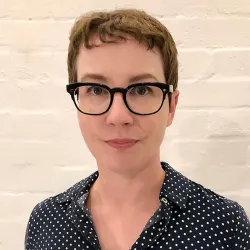
Laura Dawes is an award-winning historian, author and broadcaster, who is devoted to the vibrant communication of historical research to the general public. Her research, writing and teaching investigates the history of medicine and the law, with a focus on public outputs and engagement. Dr Dawes investigates how individuals and society at large understand health risks and the actions they (both people and government) take to modify those risks. She also is interested in the evidence that people use to make health decisions - how it is communicated, what people find persuasive and take up, and what they discount.
Dr Dawes previously worked in the media, in print, radio and television, and was awarded the Wellcome Trust/Guardian Science Writing Prize and the ABC Best Half Hour of Local Radio. Her history and science documentaries have been broadcast on, for example, PBS, the History Channel, BBC, and Smithsonian Television. Laura regularly speaks and writes in the media and to the general community on a variety of medical, scientific and legal topics.
Laura's first book, CHILDHOOD OBESITY IN AMERICA: BIOGRAPHY OF AN EPIDEMIC, was published to wide acclaim in 2014. Her second book FIGHTING FIT: THE WARTIME BATTLE FOR BRITAIN’S HEALTH was shortllisted for ACT Book of the Year. Laura holds a PhD from Harvard University in History of Science, a Masters degree from Oxford University and a Bachelors degree in physics and mathematics from Murdoch University in Western Australia. She has received numerous awards, prizes and fellowships, including Vice-Chancellor's Awards for Academic Excellence, the Frank Gillespie Prize, the Ronald Searcy Prize, the Parnell O'Connor Prize for creative writing, and the Forbes Society award in Legal History. She is currently a Research Fellow at the State Library of New South Wales.
Current Projects:
- Sunburnt Country: Sun, skin cancer and the making of Australia's Defining Disease
- Trust in a Tube: The History of SPF and Sunscreen Regulation in Australia
- Sunburnt Nation: Herbert Moran and the making of skin cancer as 'Australia's cancer'
- Sounds Worth Saving: Science communication of whale song for conservation advocacy
Fellowships:
- State Library of New South Wales
- Frank Knox Fellow (Harvard)
- Clarendon Fund Scholar (Oxford)
- Chevening Scholar (Oxford)
- Warren Centre Fellow (Harvard)
- Bicentennial Scholar (Australia)
Awards:
- Forbes Society (NSW Bar Association) Award for Legal History (2023)
- Vice Chancellor’s Commendation for Academic Excellence (2022)
- Best Half Hour of Australian Radio (2018)
- ACT Book of the Year 2016 (shortlist)
- Wellcome Trust/Guardian Science Writing Prize (2013)
- University Medal in Science (1998)
- Gillespie Memorial Prize in Physics (1995)
- Mathematics Staff Prize (1995)
- Physics Staff Prize (1994)
- Ronald Searcy Prize in Mathematics (1993)
Grants
- Forbes Society Legal Research Grant (2026)
- ANU Early Career Researcher International Travel Grant (2024)
- British Society for the History of Science research grant (2013)
- Wellcome Trust Research Grant (2013-14)
Affiliations
Research interests
My particular area of expertise is the intersection of the history of medicine, public health and the law. My research investigates how individuals and society at large understand health risks and the actions they (both people and government) take to modify those risks. I am also interested in the evidence that people use to make health decisions - how it is communicated, what people find persuasive and take up, and what they discount. My publications have included a study of the childhood obesity epidemic, public health as wartime strategy, patient activism, alternative health, medical fraud and misinformation, the rhetoric of climate change, quarantine, and the use of the law to communicate and advance public health policy.
Teaching information
Laura currently teaches SCOM3032/SCOM6032 Making Modern Science and SCOM3033/POPH6115 Health Promotion Principles and Practice.